

Types of cyber-attacks used by cyber-criminals to do bank fraud.
Ever been a victim to some types of cyber-attacks used by cyber-criminals to do a bank fraud which eventually caused losing millions of dollars including lost to vital information you had stored in your safe drive cloud by apple or Google ID then this article is for you.
This article will reveal to you the types of cyber-attacks used by cyber-criminals to do bank fraud and other types of forbidden and unauthorized transactions. So, in case you may find yourself in such situations next time you will take the bull by its horn.
The internet today has become very volatile and a goldmine for cyber-criminals who eventually became hackers through the information, lessons and skills they put in developing different types of cyber-attacks they use to go after their victims or clients.
This post I’ll be exposing some of the most crusial once so you can stay ahead of them and protect your personal stuff with strong security measures like, strong password, 2FA, Passkeys and face IDs.
Introduction to types of cyber-attacks used by cyber-criminals to do bank fraud.
In as much as internet consumers which are you and me try to our best to protect ourselves from being tracked, traced or become a target for this cyber-criminals they always seem to have their way around the internet, using series of exploitative methods and systems to get into our lives.
At some point it appears as if they have a site map of how the whole internet operates (I mean they do, but it’s not theirs we should have our freedom also) which has continously led to many people loosing millions of dollars and similar case was when the Bybit system suffered a severe cyber-attack causing them to loose over $1.5 billion over 400,000 ETH.
An update on the back story stated,
Bybit said it detected unauthorized activity within one of our Ethereum (ETH) Cold Wallets during a planned routine transfer process on February 21, 2025, at around 12:30 p.m. UTC.
“The transfer was part of a scheduled move of ETH from our ETH Multisig Cold Wallet to our Hot Wallet,” it said in a statement.
“Unfortunately, the transaction was manipulated by a sophisticated attack that altered the smart contract logic and masked the signing interface, enabling the attacker to gain control of the ETH Cold Wallet.
As a result, over 400,000 ETH and stETH worth more than $1.5 billion were transferred to an unidentified address.”
What is a Cyber-attack?
A cyberattack is a deliberate and intended attempt to disrupt, damage, steal, or gain unauthorized access to computers, networks, or digital systems servers.
Attackers, often called hackers or cybercriminals, use various techniques and fishy methods to exploit vulnerabilities in software, hardware, or human behavior to gain this access.
For the sake of this post we will be listing out the types of cyber-attacks used by cyber-criminal and including hackers to do bank fraud.
Types of cyber-attacks used by cyber-criminal to do bank fraud.
To keep you protected enough we will point out some of the most dangerous cyber-attacks used by cyber-criminals to attack and cause harm on their victims computers, mobile devices and other financial assets.
Like i said on above paragraph theses attacks often lead to losses of finances, access control and including digital assets. Let’s look into the types of cyber-attacks used by cyber-criminal.
1.1 RAT Trojan (Remote Access Trojan):

Remote access trojan
The remote access trojan (RAT) in other terms reffered to as the trojan horse is one of the most popular cyber-attack that has been in existence for decades. Cyber security agencies have reportedly collected a data of over 10,000 cyber-attack cases which has linked directly to the remote access trojan attack.
Remote access trojan attack mainly focuses on gaining full control access into a victims operating system or environment by deception to installing a reliable software or application which turns out to be infiltrated with viruses giving the cyber-criminal full access to your computer or device as if they are currently present operating it.
As a matter of facts the remote access trojan is only a child element of the trojan cyber-attack with the trojan horse horse being the parent having other children element used by cyber-criminal for this attack.
Different types of Trojan Horse Attacks:
Before looking at the different types let’s check out what trojan horse attack refers, similarly as the RAT attack it refers to the malicious software (malware) that disguises itself as a legitimate or harmless program to deceive users and gain unauthorized access to their computer systems or mobile devices. But for same purpose.
looking into the different types of trojan horse attack;
- Backdoor trojan
- Spyware trojan
- Ransomware trojan
- Keyloggers trojan
- Remote access trojan
Backdoor Trojan:
This is a scenario where instances happens to be you returning from work at night and there happens to be a suppressed party happening at home with lots of cars parked outside which you have never seen before.
Seeing this you are overwhelmed an can’t use the front door but instead decided to enter the house making use of the door at the backyard, this is the exact patterns cyber-criminals use in getting into your computer or mobile system.
The backdoor trojans allows an attacker or cybercriminal to gain unauthorized access and take control over the compromised computer.
This can be used for various purposes, including remote administration and data theft.
Spyware Trojan :
Spyware trojans are trojan attacks used to monitor your computer system or monitor your devices at the end steal sensitive information out without your notice.
When they get access into your computer and other devices there is a tendency that they can infiltrate keyloggers in your keyboard to monitor your keystrokes copying sensitive personal information like credit card details or passwords.
Spywares also can be used in monitoring your device through webcams, taking screenshot shots and monitoring all onscreen activities, also reading your emails.
Method cyber-criminals get into your system using Spyware.
You may be wondering how this spywares can get into your computer but here are methods cyber-criminals use.
- Infected website: some of the websites you visit may have been infected by hackers with spywares installed in there scripts to monitor and steal visitors data. .
- Fake ads placement: Fake ads placement is one method hackers or cyber-criminals use in spreading the spyware trojan into your computer just by clicking on the advert placement you may have given room for spyware trojan to feed on your system.
- Phishing Links: Phishing links remain on of the most popular way hackers use in spying on your devices. Phishing links are like the original version of a particular software or app you have on your phone or computer. Hackers install spyware into this links waiting for you to input your details while they feast on it.
- Fake and Malicious Softwares: Cyber-criminals and attackers use fake malicious app and software to spy on their victims and steal informations from their victims.
What do cyber-criminal or hackers use the gathered information they collect for? Read on if you like to know.
With a skilled agency (e. g RatnyxCyber ) cyber-criminals can compromise on the information gotten to hack into victims account and move out funds or steal digital assets from victims wallet.
In oother cases cyber-criminals sell off this information to hackers in dark webs forum or black markets.
Ransomware Trojan:
This ransomware Trojan works almost as the name incline to be ransom, cyber-criminals or attackers encrypt files on a victim’s computer, rendering them inaccessible until a ransom is paid by the victim.
Ransomware attacks have become increasingly common and can have severe consequences for individuals and organizations who become victim for a long period of time now and still causing havocs.
Remote access trojan:
remote access trojan (RAT) in other terms reffered to as the trojan horse is one of the most popular cyber-attack that has been in existence for decades. Cyber security agencies have reportedly collected a data of over 10,000 cyber-attack cases which has linked directly to the remote access trojan attack.
Remote access trojan attack mainly focuses on gaining full control access into a victims operating system or environment by deception to installing a reliable software or application which turns out to be infiltrated with viruses giving the cyber-criminal full access to your computer or device as if they are currently present operating it.
Another powerful cyber-attack used by cyber-criminals is Phishing
1.2 Phishing:
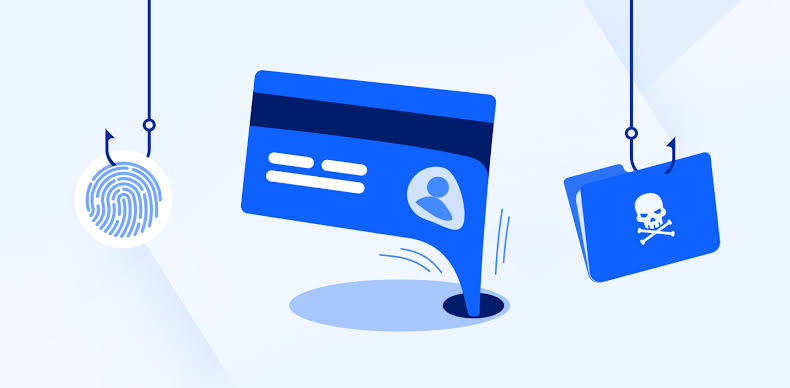
Phishing Attack
The phishing techniques attack happens to be another ancient cyber-attack technique used by cyber-criminal to deceive and trick their victims to get sensitive and personal information from their victims through links or attachments.
In mmost cases cyber-criminals target large numbers of individuals, businesses and organizations with multiple emails at the same time with deceptive description posing like banks, companies or social media platforms in other to have victims click on the link or open the attachment.
When victims click on the link or open any of the attachment sent they get hit with malicious ads and malwares waiting for them to input their credentials.
Note: Links come in form of login pages or website with payment portals while attachment come in form of PDF, ZIP File.
With the fake website details entered are copied and kept while the malware installed in files can give full access to victims system (RAT), record keylogs.
The malwares or phishing links are hidden behind legitimate looking files or website waiting to capture your your inputs through convincing ways like, verify your identity, reset your password or claim your daily rewards.
You aare not safe when this happens because cybercriminals or hackers can launch an attack on your account to steal away all your money and if doesn’t happen that way they will sell the same informations gathered on the dark web.
The nnext to looking at will be DDoS Attack
1.3 distributed denial of service (DDoS):

DDoS Attack RatnyxCyber
A Distributed Denial of Service (DDoS) assault is a malevolent attempt to overload a network, service, or website with excessive internet traffic in order to interfere with its normal operation. Several compromised computers or gadgets create this deluge of traffic, which the attacker controls as a botnet.
The true purpose of DDoS attack is exhausting the resources, bandwidth, processing power and memory of a particular network for the intended users with an aim to breakdown the site network and steal sensitive data from it database.
Forms uused to carry out a Distributed Denial of Service (DDoS);
- Botnets: Bonets are compromised devices or computers with malicious files turning them into bots for the tasking, they are for misleading tracks and traces for attacks and activities.
- Traffic Flooding: attacker sends a massive amount of traffic to overwhelm the target’s network or servers, making them unable to handle legitimate requests
- Application Layer attack: These attacks focus on exploiting vulnerabilities in the application layer of a system, such as HTTP, DNS, or SMTP. By targeting specific applications, the attacker aims to exhaust server resources or disrupt specific services.
DDoS attacks can cause significant disruptions, financial losses, and reputational damage to targeted individuals, businesses, or organizations.
The final cyber-attacks used by cyber-criminal on this post will be the MITM man in the middle attack.
1.4 Man in the Middle Attack:
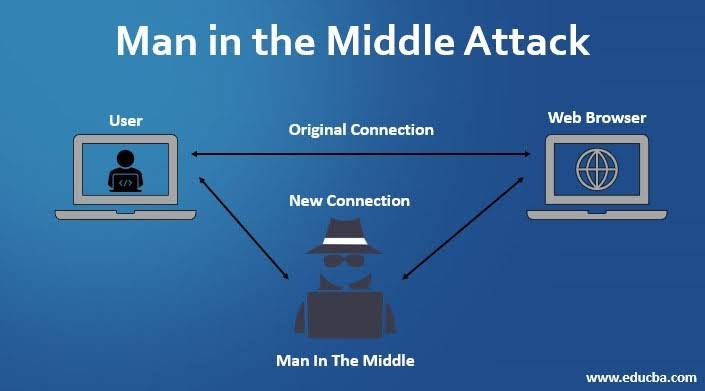
Man in the middle Attack (MITM)
Man in the middle attack is a Cyber-attack attack where the attacker insert themselves in between two people, parties or bodies that are having a conversation without this people being aware that there’s a man in the middle that is possible listening to their conversation.
A man in the middle attack can be used in few methods;
- Interception
- Decryption
1. Interception:
ARP Spoofing (Address Resolution Protocol Spoofing)ARP translates IP addresses to MAC addresses on a local network.The attacker sends fake ARP messages to associate their MAC address with the IP of the gateway (router).Result: All data meant for the gateway is sent to the attacker instead.
2. DNS Spoofing (Domain Name System Spoofing)DNS translates domain names (like RatnyxCyber.ru) into IP addresses.The attacker provides a fake DNS response to redirect the victim to a malicious website.Users think they’re on a trusted site but are actually on a fake one controlled by the attacker.
3. Wi-Fi Eavesdropping / Rogue HotspotThe attacker sets up a fake Wi-Fi network with a name like “Free_Public_WiFi.”When victims connect, the attacker can see and log all unencrypted traffic.
4. Packet SniffingOn an unsecured or shared network, attackers can use tools (like Wireshark) to capture raw data packets.If the data isn’t encrypted (like on HTTP), sensitive info like passwords or emails can be read directly.
5. SSL StrippingWhen a user tries to connect to an HTTPS website, the attacker downgrades the connection to HTTP (unencrypted).Victims don’t notice (unless they check the URL bar), and attackers intercept the plain-text data.
2. Decryption:
cyber-criminals can read all data after collecting them through SSL Stripping when the collected data are all encrypted.
The attacker downgrades a secure https connection to an unencrypted HTTP connection with victims not noticing (especially if there’s no lock icon or “https” in the browser).
Example:Victim types http:// RatnyxCyber.ru, expecting it to redirect to https://ratnyxcyber.ru
Attacker intercepts the redirect and maintains an unencrypted connection with the victim, while using HTTPS with the real server.The attacker now sits between both, seeing plain-text data.
Fake SSL Certificates (HTTPS Spoofing)
The attacker sends a fake SSL certificate to the victim’s browser.If the browser accepts it (because the user clicks through the warning), the attacker can decrypt and read the HTTPS traffic.This is more successful on users who ignore browser security warnings.
Wi-Fi Eavesdropping + No Encryption
If a site doesn’t use HTTPS and the victim is on a rogue Wi-Fi network, the attacker can simply read all traffic — no decryption needed.
Many individuals have fallen victims to this kind of attacks previously without having a clear knowledge what went wrong.
This leading to bank fraud has become very rampared and you must protect yourself by using strong security measures
Here are some types of bank fraud cyber-criminals and attackers carry out
Different types of bank fraud perfomed by cyber-criminals.
Here is where listed the transaction cyber-criminal perform after successfully launching cyber attacks on their victims.
cyber-criminals compromise on information they gather from their victims in various ways which we explained above, they sell most of the gathered information or go on performing the action themselves here are some types of bank fraud and forbidden transactions they attempt.
- One time password bypass (OTP Bypass)
- Attacks on bank servers (Bank Transfer Hacks)
- Debit/credit cards scams
- Fake bank alert /Flash fund transfer
- Crypto scams or investment
One Time Password (OTP Bypass)
One time password “OTP bypass” describes malevolent methods for getting over One-Time Password (OTP) authentication, a crucial security feature of two-factor authentication (2FA).
One-time passwords are usually a request sent from the service provided to the network providers depending on the service that is requesting the OTP.
Like wwe all are aware the internet service providers are the ones incharge of responding to one time password request from their users one attack used by cyber-criminal in bypassing or diverting OTP is the man in the MIDDLE (MITM) ATTACK.
Few other times they can make use of the phishing method pretending to be the right user and therefore receiving OTP authorization.
Attacks on bank servers (Bank Transfer Hacks)
For cyber-criminals to be able to accomplish an attack on a bank server or perform a bank transfer hack they will need the assistance of a professional hacker or an already programmed system that can help them get it done immediately.
Otherwise they will spend tons of years trying to get it done without any result, a compilation of cyber-attacks are required to gain access which can be organized in a program.
Debit/credit card scams:
This unauthorized access occurs through phishing, skimming, and information sharing by a user, oftentimes unknowingly.
Credit card fraud can occur when unauthorized users gain access to an individual’s credit card information in order to make purchases, other transactions, or open new accounts. A few examples of credit card fraud include account takeover fraud, new account fraud, cloned cards, and cards-not-present schemes.
The schemes are some of the most methods cyber-criminals use to in performing the debit/credit card scam and tools like RAASST is a very effective software used to perform credit card fraud.
Fake Bank Alert /Flash Funds Transfer:
Here iis a complex cyber-attack that has been in use for a long while today even though most cyber-criminal fail to be able to deliver a fake bank alert payment and also a flash fund transfer payment, some expert teams are able to.
The transfer is done thoroughly using the man in the middle for interception, DDoS attack which hackers use in causing tremendous traffic to the targeted network server.
The data spoofed are used in create virtual data with a clear network connection.
In absence of resources to this cyber-criminal get the help of service providers such as RATNYXCYBER to enhance their knowledge and provide adequate solution to sending fake bank alert or the flash funds.
You can decide to no longer be a victim and become an attacker by learning how most cyber-criminal carry out this task without much effort.
Crypto scams or Investment:
Since the creation of the web3 protocol that has led to the creation of digital assets such as Bitcoin, Ethereum, Litecoin, XRP and many other others that have been built through the blockchain network.
The blockchain network controls practically every digital assets and currencies, all transaction are recorded confirmed and cleared by the blockchain network within the crypto world.
As more advanced technology got introduced into the crypto community it gave pathway to the creation of other coins like the stable coins, NFT and meme coin.
Cyber-criminals also have built a wall around the new web3 protocol and finding means of exploiting the system using various means some include phishing attack, DDoS Attack.
common types are the phishing techniques, man in the middle attack, malware deployment and various others.
Crypto scams happen to be some of biggest in histories of cyber-attacks and financial frauds.
How cyber-criminals do banks frauds:
For some cyber-criminal that want to perform such activities in ways hackers and attackers do but not previlage with the right information let RATNYXCYBER as a secret service tool (RAASST) be your guide and leadway to help you on archiving that.
DISCLAIMER: Financial fraud is a crime and can lead to jail term, Choosing the right team can keep you off risk, all decisions are at owner’s risk.
As a secret service tool forged for high level transaction RATNYXCYBER is Russian advanced technology system handle by some of the best hackers from Russia, North Korea and the US.


About author





Add comment